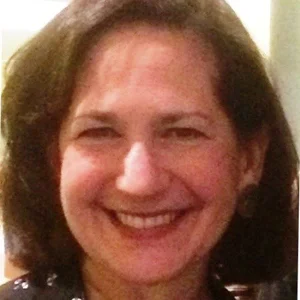
Meet Curator Tiffany Lambert
The Philadelphia Museum of Art’s new Lisa Roberts and David Seltzer Curator of Modern and Contemporary Design unpacks issues and influences facing designers today, and the heavy lifting required of contemporary curators. Interview conducted by Rosemarie Fabien of Collab.
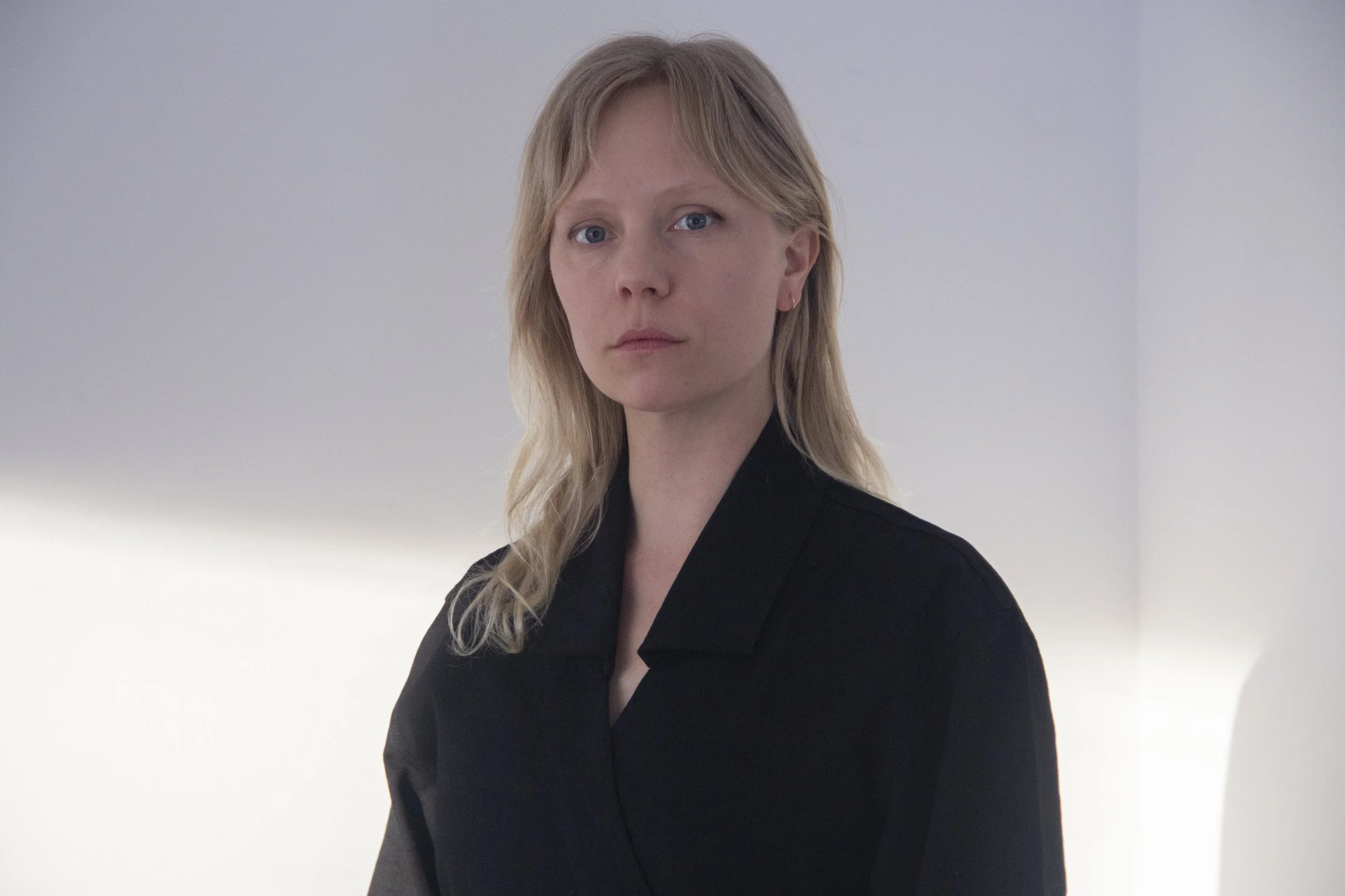
Tiffany Lambert
When did you first realize you wanted to pursue a life in art and design?
Tiffany: My path to becoming a curator wasn't conventional. As an undergraduate, I studied art and design alongside cognitive science and Asian languages and cultures. While those fields may seem unrelated, they all involve questions of perception, communication and culture.
Design, architecture and visual culture shape our everyday lives, often in ways we don't consciously recognize. We create objects and environments to meet our needs and then those things influence how we think and interact with one another. That reciprocity is fascinating.
I believe that design is a set of value systems. I am interested not just in objects themselves, but in the ideas and relationships embedded within them.
Curating emerged for me as a framework to bring together research, writing, and working closely with artists and designers. It is an opportunity to create connections—between disciplines, between historic and contemporary practices, and between objects and audiences. Exhibition-making creates a place for experimentation and discourse. An exhibition can be a space where people encounter new perspectives and reconsider familiar narratives.
I am particularly interested in artists and designers whose voices have been overlooked or who challenge conventional categories. Curating provides a platform to help bring those ideas into public conversation.
Curating is itself a form of design. Important to my work are experimental models of exhibition design and the act of creating a tangible experience for people that directly engages the concepts of the creative practice.
Which exhibitions that you’ve curated stand out most?
Tiffany: Every exhibition becomes my favorite while I'm working on it. I become deeply immersed in the artist's or designer's world, especially when I have the chance to collaborate directly with them. I'm always asking: What makes this person tick? What can we do together that hasn't been explored before?
I think of curating as research made public. It is display and perspective and encounter. Refashioning: CFGNY and Wataru Tominaga—the first contemporary fashion exhibition at the Hammer Museum (2024) and also the first at Japan Society, New York (2022)—is a project that I’m incredibly proud of.
One of the greatest privileges of my work is being able to support exceptional artists and designers and help create opportunities for them to develop and present ambitious ideas.
Refashioning was a good example of this, and also how I appreciate working with people whose practices don’t fit neatly into institutional categories. I also loved that show for the level of collaboration it had. Every exhibition requires collaboration but this one felt particularly special.
Another stand out for me is Kazuko Miyamoto: To perform a line (2022, Japan Society). It was the first institutional solo exhibition of an extraordinary artist whose contributions to Minimalism deserved much wider recognition. Miyamoto transformed everyday industrial cotton string into a sculptural material, creating works that were both architectural and deeply personal.
The exhibition reflected many of the values that guide my work. It gave overdue attention to an important artist while expanding our understanding of postwar and contemporary art history. The exhibition traced more than five decades of work, from her earliest paintings and drawings to architectural, chimeric string constructions and kimono and textile works.
The installation itself was an important part of the experience. I think exhibition design should do more than provide a backdrop; it can deepen our understanding of the work and offer audiences multiple ways to engage with it. That's something I strive for in every project.
How do you see the Modern & Contemporary Design Department at PMA evolving over the next few years?
Tiffany: My role at the museum is both straightforward and wonderfully complex. I'm here to organize exhibitions and programs, build and interpret the collection, engage with the community, and think strategically about the future of design at the PMA.
Through all of this, I’m building upon an important legacy. I want to make it relevant and meaningful to people. I want people to see that design isn't simply about objects—it's also about ideas, processes, experiences, and the ways we live.
More granularly, my vision is to reconcile less traditional ideas about what an exhibition can be, where design can and should exist, who makes it and how.
I’m very interested in asking, “What can happen within institutional walls? Whose voices get that opportunity? What ways of practicing design are represented?” In my role as curator I hope to explore the value and potential of design more broadly. I want to encourage critical dialogue and make space for new modes of engagement.
One of the things that attracted me to the PMA is its encyclopedic collection. Modern and contemporary design doesn't exist in isolation here. It can be placed in conversation with centuries of artistic and cultural history, creating unexpected connections and fresh ways of thinking.
I've been particularly excited to begin working with the Design Excellence Awards and Exhibitions. It's a remarkable program. There are very few design awards in the world that are paired with a museum exhibition. The PMA started in the 1876 Centennial Exhibition, which celebrates design, manufacturing, and innovation. It gives us a great chance to think about how design is used today and where it will go in the future.
You’ve already begun putting that vision into practice with the 2025 Design Excellence Award. Can you talk about that project?
Tiffany: Yes, I came in and hit the ground running! I am fortunate to be able to continue this prestigious tradition. Previous recipients of the DEA include renowned figures such as Zaha Hadid, Dieter Rams, Patricia Urquiola, and so many more. In 2025, the award was presented to Chilean-born Sebastian Errazuriz, whose work spans art, craft, design, and technology.
It was a unique opportunity to expand the program’s focus to reflect the diverse ways designers practice today, recognizing a body of work that exists primarily within a gallery model. This acknowledged that limited-edition and one-of-a-kind works can have equally important impact on contemporary design discourse to include experimentation, craftsmanship, and conceptual inquiry alongside commercial production.
Three of the works presented in Errazuriz’s exhibition, Double Take (November 21, 2025–August 16, 2026) were commissioned. This further underscores the PMA’s institutional commitment to investing in design holistically, to supporting contemporary practice, and to expanding the collection’s scope.
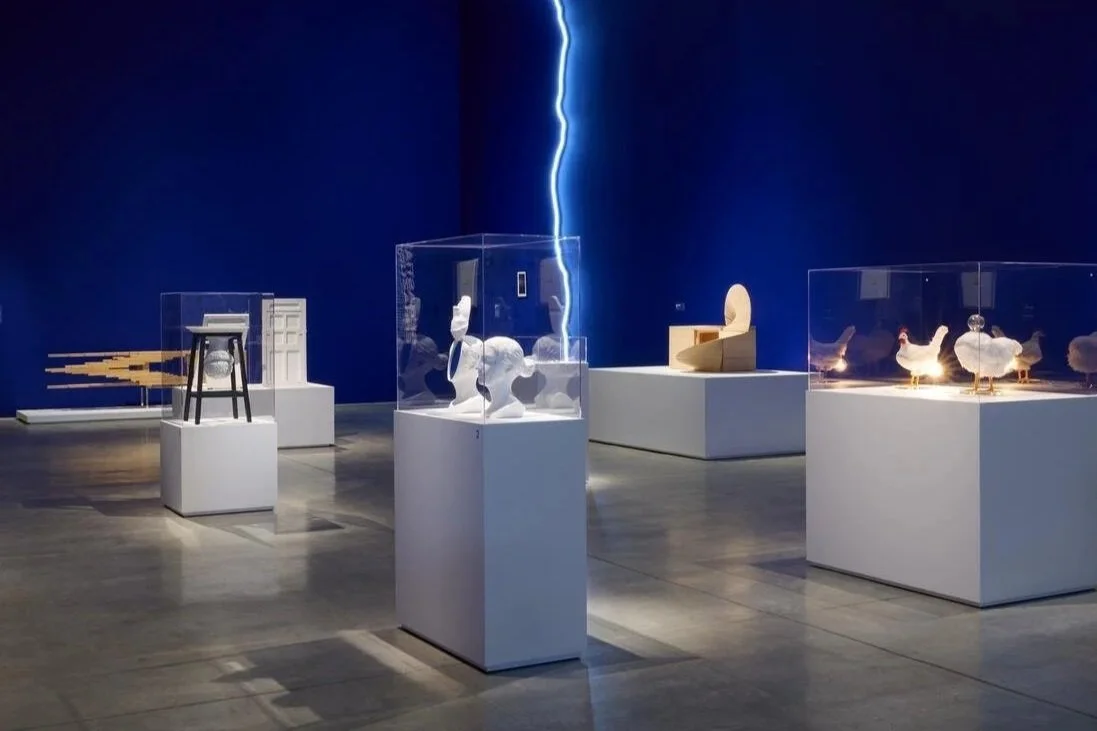
View of the Sebastian Errazuriz exhibit Double Take at the PMA, curated by Lambert
Having come from New York, how has your experience of living and working in Philadelphia compared?
Tiffany: Place shapes the stories we tell. New York offers an incredible concentration of artists, institutions, and ideas. Philadelphia has its own distinct history and character, with deep connections between art, craft, design, architecture and community.
Philadelphia and the broader region has produced or been closely associated with an extraordinary number of creative figures like Mary Cassatt, Louis Kahn, Denise Scott Brown and Robert Venturi, Alexander Calder, Jasper Johns, Marcel Duchamp, Anne Tyng, Wharton Esherick, and George Nakashima in addition to important patrons like Albert Barnes and the Arensbergs.
What remains a constant for me is meeting designers where they are, and helping to tell stories that deserve greater attention. I'm interested in the intersections where a particular designer, object or history can illuminate larger questions about culture and the ways we live.